
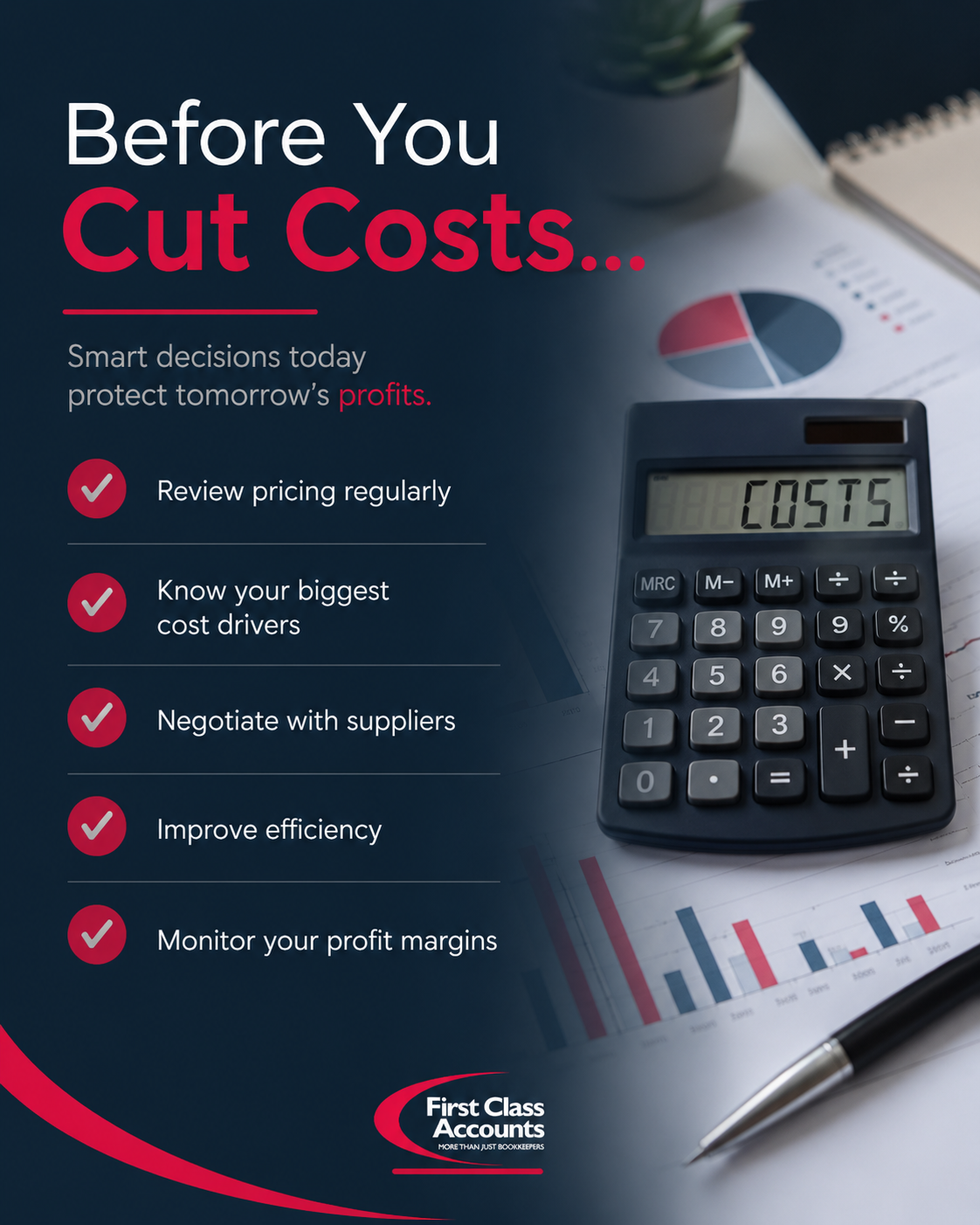
Rising business costs are putting pressure on Australian businesses—but cutting expenses isn’t always the right solution. Learn how to identify which costs are helping your business grow and which ones are simply draining cash.
Rising Costs Are Affecting Every Business
If you’ve noticed your business expenses increasing over the past few years, you’re certainly not alone.
Australian businesses continue to face rising costs across wages, insurance, utilities, fuel, finance and supplier pricing. While reducing expenses may seem like the obvious solution, making cuts without understanding their impact can often create bigger problems.
The goal isn’t simply to spend less.
It’s to spend smarter.
What the Research Tells Us
Recent Australian research highlights just how challenging the current business environment has become.
According to the MYOB Business Monitor:
- 58% of Australian SMEs say the cost of doing business is a bigger issue than it was 12 months ago.
- 29% have increased their prices to manage rising costs.
- 28% have accepted lower profits.
- 21% have reduced or skipped paying themselves to keep the business operating.
The Australian Bureau of Statistics (ABS) also reports that:
- 46% of businesses experienced increased operating expenses.
- The biggest cost pressures were:
- Business overheads (65%)
- Staffing costs (40%)
- Finance and debt commitments (19%)
These figures show that cost pressures are widespread—but they also highlight the importance of making informed financial decisions rather than reacting with across-the-board cuts.
Not Every Expense Is a Bad Expense
Every dollar leaving your business should have a purpose.
Some expenses generate revenue.
Some improve efficiency.
Some reduce risk.
Others quietly consume cash without adding real value.
The challenge is knowing the difference.
Before removing any expense, ask yourself these five important questions.
1. Does This Expense Generate Revenue?
Many business owners focus on what something costs.
Instead, ask yourself:
“What value does this expense create?”
Expenses that help your business grow are often investments rather than overheads.
These may include:
- Marketing that consistently generates enquiries
- Software that automates repetitive tasks
- Staff training that improves productivity
- Equipment that increases efficiency
- Customer service tools that improve client retention
Ask Yourself
✔ Does this help attract new customers?
✔ Does it save time?
✔ Does it improve customer experience?
✔ Would removing it reduce future sales?
Tip: The cheapest expense isn’t always the best saving if it reduces your ability to grow.
2. Could Removing This Expense Cost More Later?
Some business expenses don’t directly produce revenue—but they prevent expensive problems.
Examples include:
- Equipment maintenance
- Cybersecurity
- Insurance
- Professional bookkeeping
- Accounting advice
- Staff training
- Workplace safety
These expenses help protect your business.
Skipping them may reduce costs today but increase costs tomorrow.
Consider This
Delaying maintenance may result in expensive repairs.
Reducing staff training may increase mistakes.
Poor financial records can lead to compliance issues or missed tax deductions.
Sometimes prevention provides the greatest return on investment.
3. Are You Paying for Things You No Longer Use?
One of the easiest ways to improve profitability is reviewing recurring expenses.
Many businesses continue paying for:
- Unused software
- Duplicate systems
- Old phone plans
- Memberships
- Forgotten subscriptions
- Excess software licences
Quick Expense Audit Checklist
Ask yourself:
- Is anyone still using this?
- Could we downgrade the plan?
- Does another system already do the same job?
- When was this last reviewed?
Even small monthly savings can add up significantly over a year.
4. Have Your Supplier Costs Increased?
Price increases have become common across many industries.
Rather than immediately changing suppliers, consider reviewing your current arrangements.
Questions Worth Asking
- Can pricing be renegotiated?
- Are better payment terms available?
- Would ordering larger quantities reduce costs?
- Are there comparable suppliers offering better value?
- Is the supplier still meeting your business needs?
Remember that value isn’t determined by price alone.
Reliable suppliers often reduce delays, improve customer service and save valuable time.
5. What Are Your Financial Reports Actually Telling You?
Your bank balance tells you one thing:
How much cash you have today.
Your financial reports tell you:
- Where your money is going
- Which expenses are increasing
- Whether profit margins are improving or declining
- Whether your business is becoming more efficient
Every business owner should regularly review three key reports.
Profit & Loss Statement
Your Profit & Loss shows:
- Revenue
- Cost of sales
- Operating expenses
- Gross profit
- Net profit
This report helps identify spending trends and areas where expenses may be increasing.
Cash Flow Statement
Cash flow tells you:
- Whether enough money is coming into the business
- If you can comfortably pay wages, suppliers and tax obligations
- How seasonal changes affect cash availability
A profitable business can still experience cash flow problems.
Balance Sheet
Your Balance Sheet provides a snapshot of your business by showing:
- Assets
- Liabilities
- Loans
- Working capital
- Owner equity
Reviewing your Balance Sheet alongside your Profit & Loss provides a much clearer picture of financial health.
Look for Trends—Not Just One Month
Avoid making decisions based on a single month’s results.
Instead, compare your financial reports over the past 6–12 months.
You may discover:
- Gradually increasing supplier costs
- Advertising expenses rising faster than sales
- Declining profit margins
- Seasonal spending patterns
- Software costs accumulating over time
Small trends are much easier to correct before they become major issues.
Before removing any expense, ask:
Spend Smarter, Not Less
Reducing expenses shouldn’t be about cutting everything.
It should be about making every dollar work harder.
✔ Remove waste before cutting investments.
- Does this help generate revenue?
- Does it improve efficiency?
- Does it reduce risk?
- Does it improve customer experience?
- Does it support future growth?
If the answer is yes, it may be an investment rather than a cost.
Key Takeaways
✔ Review expenses regularly—not only when cash flow is tight.
✔ Focus on value, not just cost.
✔ Use your financial reports to guide decisions.
✔ Compare trends over time rather than relying on your bank balance.
The businesses that perform best aren’t always the ones spending the least.
They’re the ones making informed financial decisions based on accurate information.
References
- MYOB Business Monitor – Australian SME Business Monitor and Cost of Doing Business Research.
- Australian Bureau of Statistics (ABS) – Business Conditions and Sentiment Survey.
- business.gov.au – Managing business finances and cash flow resources.