

The start of a new year is a good time for small businesses to pause, reflect and decide where to focus next. Clear goals help owners stay on track, manage resources effectively, and respond to market changes.
Although each business has its own priorities, the process of setting meaningful goals is similar for all, and a structured approach now can shape performance for the rest of the year.
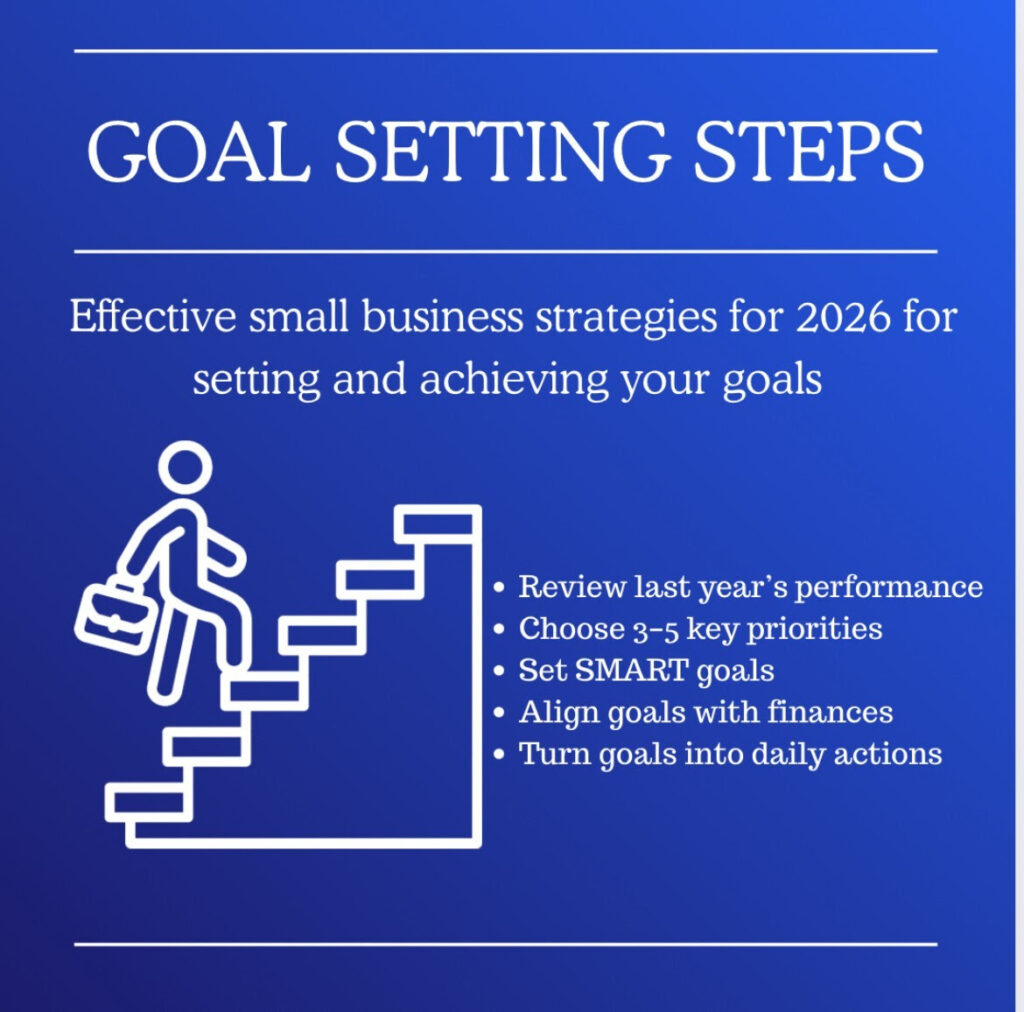
1. Look back before looking forward
Effective goal-setting begins with an honest review of the past 12 months. Decisions based on evidence are far stronger than those based on assumptions. Useful questions include:
- What worked, and why?
- Which products, services or clients delivered the strongest results?
- Where did delays or unnecessary costs appear?
- What held us back that we can address this year?
Most small businesses already track figures such as revenue, expenses, customer numbers and job turnaround times. Analysing this information can reveal useful patterns.
Government resources such as business.gov.au advise businesses to begin with a simple performance assessment before setting new targets. Understanding your own trends, whether seasonal, operational or financial, helps ensure new goals match the realities of the business rather than the ideal version of it.
2. Focus on a few priorities
Setting too many goals can dilute attention. A better approach is to identify three to five priorities that will make the greatest difference. These may include:
- Strengthening cash flow
- Expanding the customer base
- Improving digital systems
- Streamlining administration
- Enhancing the customer experience
Fewer, clearer goals help teams understand what matters most and how their work contributes to the broader plan.
3. Make goals specific and measurable
General aims such as “grow the business” or “improve efficiency” provide limited direction. Specific goals create clarity and accountability. The SMART framework of Specific, Measurable, Achievable, Relevant and Time-bound is widely recommended because it makes progress easier to track.
For example, instead of “increase sales”, a more useful goal would be “increase monthly recurring revenue by 10% by 30 September”. The detail ensures there is a clear target, timeline and way to measure success.
4. Align goals with your financial position
Every business goal involves money, whether it requires new staff, updated equipment or better digital tools. Before finalising your goals, review your cash reserves, expected income and major financial commitments.
Many Australian small businesses have been navigating higher operational costs in recent years. Setting goals that recognise these pressures helps reduce the risk of over-commitment and supports more resilient decision-making.
A realistic financial base makes it easier to prioritise, monitor and adjust your plans throughout the year.
5. Break goals into practical steps
Large goals can feel overwhelming unless they are broken into smaller, manageable actions. For example, if the focus is on improving cash flow, the steps might include:
- Reviewing payment terms
- Introducing automatic invoicing or reminders
- Following up on overdue invoices more often
- Considering short-term finance options if suitable
This approach helps owners track what has been completed, what remains and whether the timeline still makes sense.
6. Build in flexibility
Business conditions rarely stay the same for an entire year.
Customer expectations shift, supply chains change, new technology disrupts and new competitors appear.
Goals should guide decisions, but they should not be rigid.
Reviewing progress each quarter allows you to adjust targets, revise timelines or reallocate resources if circumstances change.
Recent years have highlighted the importance of flexibility. Many advisory groups encourage small businesses to treat goal-setting as an ongoing process rather than a once-a-year exercise.
7. Involve your team and advisers
Goal-setting is more effective when you involve others. Employees often have insight into daily challenges and customer needs. Including them in discussions helps build engagement and improve execution.
External advisers, such as accountants, can also provide perspective. They can help interpret financial data, highlight risks and benchmark your performance against similar businesses. Their experience can support more practical and achievable goal-setting.
8. Turn goals into daily practice
Setting goals is only the beginning. To make progress, they need to be part of everyday operations. This might include:
- Updating internal procedures
- Assigning responsibilities
- Tracking key indicators
- Holding short monthly check-ins
- Celebrating milestones
When goals are absorbed into routine decision-making, the business is more likely to stay focused and consistent throughout the year.
A clear plan for a stronger year ahead
Thoughtful goal-setting does more than create a list of intentions. It helps small businesses stay accountable, plan with purpose, chart unsteady months and respond confidently to change.
By reviewing the past year, choosing priorities carefully, setting measurable targets and involving the right people, owners can begin the new year with clarity and direction.