

If you’re a business owner, you’ve probably noticed the change. Hiring is taking longer, budgets are tighter and your team may be working fewer hours. The latest labour force data from the Australian Bureau of Statistics (ABS) confirms it: unemployment rose to 4.3% in June, the highest level since December 2021.
While the number might seem small, the broader implications are not. The labour market is cooling, forcing many businesses to rethink how they manage labour, costs and compliance.
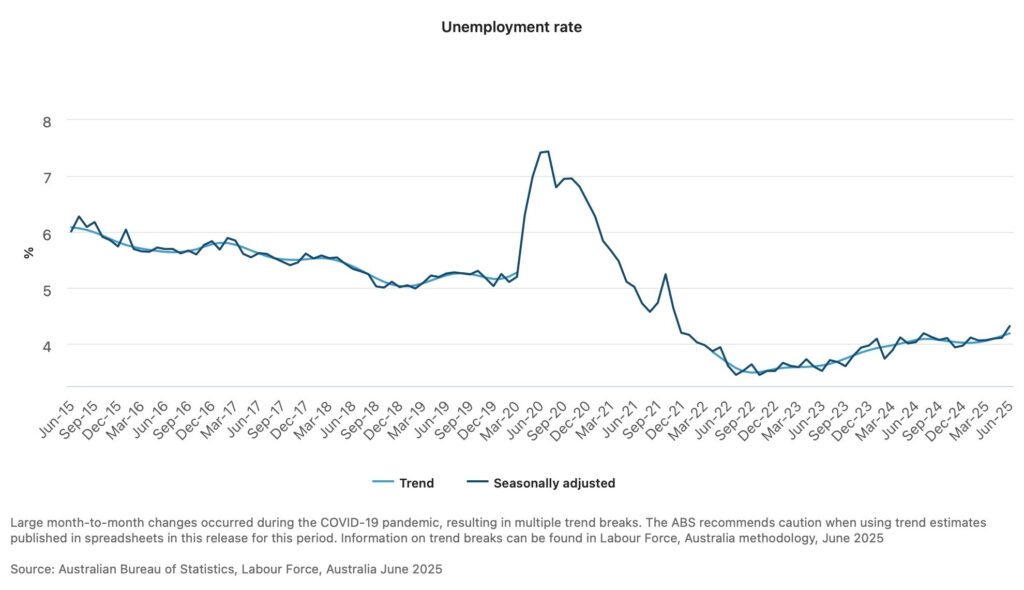
Fewer full-time roles, more flexibility
The June ABS data revealed a modest net employment gain of 22,800 jobs, but the type of roles being filled is telling. Full-time positions fell by 38,200, while part-time roles rose by 40,200. This signals a clear shift in hiring behaviour. Rather than taking on long-term salary commitments, many businesses are opting for more flexible, lower-risk staffing models.
ScotPac’s latest SME Growth Index paints a similar picture:
- 49% of SMEs are hiring contractors over full-time staff
- 30% have reduced hiring altogether
- 14% are outsourcing more work (including offshore)
- 13% are cutting hours or reducing headcount
- 5% are considering selling or closing their business
Rising labour costs, including July’s increase in the super guarantee to 12%, are driving these choices, as businesses try to stay lean and adaptable.
But flexibility isn’t always straightforward
While a more flexible workforce sounds appealing, transitioning to part-time, casual, or contract models comes with legal and operational complexity.
Under Fair Work legislation, casual employees may be entitled to request conversion to permanent roles after 12 months of regular work patterns, and employers must comply with clear rules around entitlements, notice periods and termination.
Misclassifying an employee as a contractor can trigger significant penalties under Australian Tax Office rules on sham contracting. And reducing a staff member’s hours without agreement? That’s likely unlawful unless part of a formal redundancy process.
In regulated sectors like aged care or early childhood education, mandated staffing ratios can further restrict your options. In these cases, efficiency gains may come from smarter rostering, upskilling or role diversification rather than trimming headcount.
Hours are down, participation is still high
ABS data also shows that national hours worked fell 0.9% in June, a drop of 19 million hours, yet the participation rate held steady at 67.1%. This tells us people are still keen to work, but they just aren’t getting the hours.
For sectors like retail, hospitality and care, this could create opportunities to tap into an eager workforce. But there’s a caveat: underemployment is on the rise. Workers who want more hours than they’re offered may become disengaged or seek roles elsewhere, driving up turnover.
Offering staggered rosters, fair shift sharing and clear communication can help you retain reliable, motivated workers without overcommitting resources.
What should business owners be doing now?
A hiring slowdown doesn’t mean standing still. Here are three actions worth prioritising:
1. Rethink your staffing structure, with compliance in mind
Explore a balanced mix of full-time, part-time and casual roles, but ensure any changes align with Fair Work, ATO, and industry-specific regulations. If in doubt, seek legal or HR guidance before making structural shifts.
2. Focus on engagement, not just numbers
Lower hours can quietly erode morale and productivity. Keeping your team engaged by offering fair shift allocations and open communication can make a real difference to retention and performance.
3. Model rising costs and seek expert support
Wages and compliance costs are rising. Talk to your accountant or advisor about funding options and cost-control strategies.
The job market is evolving, and businesses need to evolve with it. A hiring slowdown doesn’t mean you stop building your team; it means you build smarter, with an eye on flexibility, compliance and long-term sustainability.