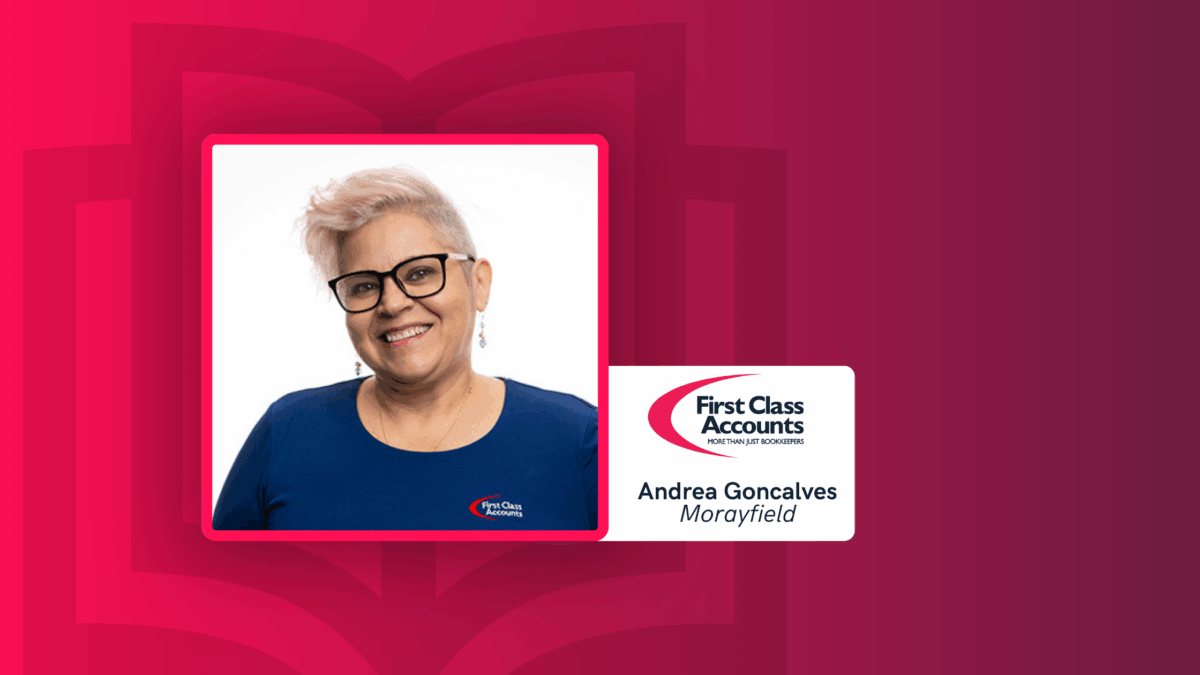
This article shares Andrea Goncalves’ journey from long-time employee to business owner, highlighting the challenges, support, and personal growth involved in building a bookkeeping franchise with First Class Accounts.
What you’ll learn:
- Why Andrea chose to move from employment into running her own bookkeeping business
- The challenges of balancing full-time work, study, and franchise training
- How networking and relationship-building helped her grow a client base from scratch
- The emotional ups and downs of starting a new business
- How franchise support and community made a critical difference during difficult moments
- The value of ongoing learning, workshops, and professional development
- Why resilience, confidence, and asking for help are essential in the early stages
After years of working in accounting and bookkeeping across three countries, Andrea Goncalves decided it was time to take a leap of faith.
Originally from Brazil, Andrea had worked in finance since she was 15, before building a career in New Zealand and later Australia. But after nearly a decade as an employee, she wanted something more, a chance to build her own business and control her future.
“I’ve worked in accounting and bookkeeping all my life,” Andrea explains. “But I’d never worked for myself before. I needed to feel confident that if I had a question, someone would be there to hold my hand, at least in the beginning.”
When she began researching bookkeeping franchises, First Class Accounts stood out. The brand’s long-standing reputation, community support and focus on ongoing learning gave her the confidence to make the jump.
Balancing study, work and starting over
Starting a business while still working full-time proved to be Andrea’s first big challenge. She wanted to keep a stable income while completing her franchise training — but juggling both quickly became exhausting.
“There was a lot to study,” she recalls. “And I was still working full time. It wasn’t until I finally let go of my full time then another part-time job that I could focus and finish. That was the moment I really felt proud of myself to complete all to good standards.”
Completing her First Class Accounts training marked a major milestone. Working from home and learning independently wasn’t easy, but finishing the program reminded Andrea that resilience pays off.
Learning to network and trust herself
Building a client base from scratch pushed Andrea far outside her comfort zone.
She began attending every networking event she could find, handing out cards, offering advice, and introducing herself to local business owners.
“It can be lonely to work from home,” she says. “But I believe the connections you make when networking are for life. It takes time to earn trust — but once people trust you, they don’t want to let you go.”
That trust became the foundation for Andrea’s growing client relationships. Like a good hairdresser, she jokes, once people find the right fit, they stay.
Support when it mattered most
Six months into running her business, Andrea hit a low point. The learning curve, the pressure of uncertainty, and the isolation of working alone became overwhelming.
“I started doubting myself,” she admits. “But instead of keeping it in, I reached out to the national representative for franchisees and within hours, the support team was calling me. They listened, they cared, and they helped me through it.”
That moment changed everything.
It reminded Andrea that joining First Class Accounts wasn’t just about running a business, it was about joining a network that genuinely looks out for its people.
Growing through learning and community
Now, Andrea continues to attend every workshop, webinar and conference available, staying connected with other franchisees and industry partners.
“The team at First Class Accounts are incredible,” “Everyone is so giving with their time, it’s worth more than money.”
She’s now focused on completing her Cert IV in Bookkeeping, expanding her client base, and continuing to learn and grow her practice.
Andrea’s advice for aspiring franchisees
“Ask questions. Don’t be shy. Be kind to yourself, because there’ll be highs and lows,” Andrea says. “Reach out to First Class Accounts, the support is there when you need it. If you believe in yourself and you’re willing to work hard, it’s the best decision you’ll make.”
Ready to take the leap?
If Andrea’s story inspired you, find out how you can start your own bookkeeping business with First Class Accounts.
Explore franchise opportunities